WaterMelonPolitics.com domain is for sale:
https://www.domaineasy.com/buy-domain/watermelonpolitics.com

WaterMelonPolitics.com domain is for sale:
https://www.domaineasy.com/buy-domain/watermelonpolitics.com
After 11 years of attending the US Open, this will be my last US Open.
The ticket prices are so outrageous and they need to do something
about the bot buying—GREED!!
I will be spending my money on the Australian Open when the ticket
prices are at standard prices….just $35!!! because they cannot
resell the tickets for more than face value.
I am sure I am not the only one having this piss off greed issue
…USTA needs to do something about it and this is not good for Tennis
in the USA.
https://www.curbed.com/article/us-open-arthur-ashe-stadium.html?mc_cid=61125416cc&mc_eid=142172d3e7
When P.J. Simmons heard about the $800 million renovation of Arthur
Ashe Stadium, and the addition of over 2,000 premium courtside seats,
he was optimistic. “I thought maybe that would depress prices
slightly,” he said.
An environmental consultant by trade, Simmons might be the most
knowledgeable person about Ashe who has never worked there. For up to
eight hours on a given day, he monitors fluctuations in Ticketmaster
and StubHub and dispenses advice on his website, the Road to 4.5
Tennis, on the best way to score cheap Open seats. This has become
especially helpful as tickets for the tournament have spiked, largely
due to the resale market, which the Open can’t regulate like other
Grand Slams.
The average cost of cheap seats in Ashe, the marquee venue at the
Billie Jean King National Tennis Center in Flushing Meadows, have seen
an average markup of over 200 percent. At the other end of the
spectrum, a single courtside seat for the men’s finals was going for
$29,000 in August, and that’s despite rumors that the two top male
players, Jannik Sinner and Carlos Alcaraz, may withdraw because of
injuries. “The other day, I was like, ‘Oh man, there are front-row
tickets for this night, and that would be so fun to treat somebody to.
Ten minutes later, they were gone. And then ten minutes after that,
they were fucking on resale,” Simmons said.
It’s July, less than a month before Fan Week, the official start of
the Open, and normie fanatics like Simmons, the die-hards without
expense accounts or family offices, are stewing because they aren’t
finding the deals they expected at the updated Ashe. “It has almost
been the reverse,” he said. In fact, by the time the renovation
project is completed next year, the world’s largest tennis stadium
will have no added capacity. Already, it’s removed over half the seats
from a section known as loge, the balcony above courtside where
budget-conscious fans could hear the compressed explosion of a Naomi
Osaka return or study the footwork of dark-horse Filipina player
Alexandra Eala without paying to mingle with celebrities or receive
seatside service.
While Kirsten Corio, the chief commercial officer of the U.S. Tennis
Association, says that the renovation merely “takes a few thousand
seats from upstairs and moves them downstairs,” it would be clearer to
say that the stadium is shifting as much capacity as it can closer to
the court, where seats are more expensive. The new geometry of the
stadium provides easy access to new restaurants and bars exclusively
available to fans sitting courtside, including the Blue Room, which
the USTA calls “the pinnacle of luxury … with dedicated seated tables
for a plated multi-course dining experience.”
In remaking Ashe, the USTA is doing the same thing as every branch of
the hospitality industry by catering to those for whom money is no
object with the most luxurious, most exclusive, most over-the-top
experiences imaginable. At the Open, there has been a dramatic
expansion of bundles with expensive hospitality options. This year’s
priciest offerings, which range as high as $85,000, include a gifting
suite, locker-room access and private hitting clinics with tennis
royalty on practice courts. Next year, a subterranean,
London-social-club-style complex of lounges called the Bunker Suites
is expected to open. During the tournament, access to the space, which
is taking over a catacomb once used by players for warmups, has been
floated at $120,000 per person.
If there is a preview of where the Open is headed, it can be found in
Southern California. That’s where Larry Ellison, one of the richest
men in the world, who is also a tennis fanatic, bought the Indian
Wells Tennis Garden venue in 2009 and then loaded it with high-end
amenities, including outposts of both Nobu and Spago offering
tableside views of the courts. Ellison’s innovations were disruptive:
Fans who could afford “Tennis Paradise,” as Indian Wells came to be
known, began to expect similar offerings at other tournaments. The
difference is that Indian Wells wasn’t just operating like a private
club during the tournament. For most of the year, Indian Wells is a
privately-owned club.
The Open finds itself also competing with Wimbledon, the Henley Royal
Regatta, the races at Royal Ascot, and other elite sporting events for
the attention and patronage of rich rubberneckers. “They’re not
necessarily a tennis-playing fanatic or there for business. They’re
there for I want to go to the Super Bowl. I want to go to a World Cup
final. I want to go to the US Open and get as close as I can,” said
Corio. They’re people like the clients of Renee Falack, an adviser at
the travel and destination-events agency Embark Beyond. “They’re not
necessarily so into tennis, but more into the scene and wanting to be
there,” she says. They’re impulsive, too. “Luckily, we have great
contacts who are able to find tickets at the last minute.” Of course,
that means they’re paying a premium on top of the $10,000 or more
they’re likely paying for a seat, “but they’re okay with that.” And
they don’t want to sit in the loge.
“They want to be near the players, they want to be on TV — that’s
definitely a part of it, especially in New York,” Falack says. “It’s
not just about getting in the stadium or getting into the U.S. Open.
They want to be courtside.”
The U.S. Open has worked hard to attract younger fans, many of whom
would be startled by how much the tournament has changed. “Nobody
seems to remember,” said Adrian Benepe, the former New York City Parks
commissioner, who sat courtside during the 1979 women’s-singles final
between Chris Evert and Tracy Austin That was a year after the modern
Open was born. For the previous half-century, the private West Side
Tennis Club in Forest Hills, often described as “America’s Wimbledon,”
had hosted the tournament. If tennis then had an image as exclusive,
white, and stuffy, the West Side Tennis Club epitomized it. Players
and spectators tended to wear all white. Advertising was minimal, and
displays of enthusiasm were politely discouraged. “It was insular and,
outside of among tennis fans, not a very big deal,” recalled Richard
Farley, an attorney who’s been attending the Open since he was a
teenager, back when he sat in the bleachers. These days, the law firms
he works with invite him to their corporate boxes. “The National
Invitation Tournament at Madison Square Garden was a bigger event,”
Farley said. “You would never dream of going out to Forest Hills and
taking a client. They wouldn’t come with you.”
Tennis had long been a rich person’s sport: To play, you needed access
to a court, and most courts belonged to private clubs. But in the
1970s, a boom in public-tennis-court construction cultivated a new
generation of everyday fans and interest in the sport was spurred by
media spectacles like the 1973 “Battle of the Sexes” between Billie
Jean King and Bobby Riggs. The Open was evolving, too. One adjustment
that now seems quaint but at the time resulted in near riots: night
games. When a 1977 Guillermo Vilas match was shifted to the evening,
fans staged a sit-in and threw objects at the court. That same year, a
spectator was struck by a stray bullet during a night match, and Jimmy
Connors lunged at a photographer after losing in the final. The
tournament would be described as “sinister” and “psychotic,”
reflecting the overall mood that summer of New York, plagued as it was
by arson, blackouts, bankruptcy and a serial killer. “That was the era
of people acting like maniacs in stadiums,” said Farley.
The story goes that a flight into La Guardia inspired the move to
Flushing Meadows. William “Slew” Hester, a freewheeling Mississippi
oilman who had just become USTA president, was circling over Flushing
Meadows–Corona Park when he looked out the window and saw the future
of tennis in a rusting, weed-filled stadium called the Singer Bowl.
Hester envisioned a massive sports complex with the capacity for
larger crowds and modern facilities for players and would offer over
scores of tennis courts available to the public at modest hourly
rates.
“Moving to Flushing Meadows — to the borough of Queens — turned tennis
from a country-club sport into a people’s sport,” said Benepe, who
calls the old USTA “a fussy, patrician organization.” For the first
time, a Grand Slam was played on public courts. Other organizations
lease land from the city, including the Mets and Yankees. However, the
USTA bonded itself with Queens in a highly public and emotional way,
touting the Open as “The People’s Slam.”
In the 1980s, there were fears that the Open, which quickly outgrew
the Singer Bowl (renamed the Louis Armstrong Stadium), would leave the
city. The Dinkins administration kept it in New York with a deal
reached in 1993, during the mayor’s final weeks in office. “We could
have easily lost it,” said Claude Okin, the founder and CEO of
Sportime, which operates private tennis clubs throughout New York.
“But David Dinkins loved tennis.” The 99-year lease requires the USTA
to share revenue with the city and pay for its own infrastructure, an
unheard of arrangement today, when sports franchises routinely extort
the government for subsidies and tax breaks.
During the 2000s, the democratization of tennis seemed to stall. The
audience for the Open became “bifurcated,” says Caitlin Thompson,
founder and editor of Racquet magazine. “You’d have the warrior types
who’d be like, ‘I’m gonna go watch a Kiki Bertens–Elise Mertens
battle,’ one obscure Belgian player against another obscure Dutch
player, on court 17, because you knew they’d have it out and you’d get
your money’s worth.” The other segment became “guys in fleece vests.”
It was around the 2010s that it became obligatory for banks, law
firms, and luxury brands such as Mercedes and Rolex “to get a
well-placed box at the highest tier,” Farley said. “You want to
provide concierge service to your clients, who, if they’re local, you
get them car service to and from. And if they’re out of town, you fly
them in and you put them up at a nice hotel and do door-to-door
service. And you’ll do this over the course of two weeks with, if
you’re lucky, a different client every night.”
The pandemic was a gift to tennis. Public courts were full again, many
of them with new fans looking for safe outdoor activities. But the
2020 Open was played in empty stadiums, and in 2021 the tournament
fell short of capacity because of reduced international travel. It was
not long afterwards that the renovation now underway was conceived.
The USTA, uncertain if there would ever be a normal tournament again,
looked to the success of Ellison and Indian Wells and decided that a
lucrative future — in a world where it was easy to imagine no future
at all — lay in VIP suites. Hotels, airlines, and cruise ships also
bet big on the rich: not just because there was money in it, but also
because their backs were against the wall.
After 2022, the floodgates opened. “We just couldn’t offer enough
access to satisfy the demand,” said Corio. With lockdown over, the
demand for live events surged, and the tournament began blowing up
previous attendance numbers. In 2024, the Open recorded a million
guests for the first time. The exuberance of the scene was now part of
the draw, attracting influencers who discovered that posing for
selfies at Ashe made for great content. “The majority of them are
calling brands being like, ‘Hey, I’ll do this for free,’ making it
look like they have sponsorships, but they don’t,” said Walker Ward,
the creator of the Instagram meme account WalkSauce42_. The tournament
became a place to be seen and to make money by being seen.
“Social media changed everything, and the Open is completely different
because of it,” said Chris Widmaier, the former head of communications
for the USTA. “If you take a selfie at a Yankees game, great, you’re a
fan. If you take one at the Open, you’re making a statement, and it
says, ‘Look at me, ‘I’m rich.’” The USTA appears to have embraced the
opportunity to provide shareable experiences and photo ops — jumbo
tennis rackets, puppies, Ball Crew Karaoke — that annoyed the old
guard. “Last year, the USTA was bragging about how it had hit an
attendance record of 74,000, but it should be embarrassed,” says an
attorney who has attended nine Opens. The stadium is so packed, he
says, “that people are constantly walking around, and you can see some
of the players are irritated.” But the organizers aren’t complaining.
This year’s Amex presale sold out in under two hours.
The modern U.S. Open has always been about unruliness: fans talking
between points, car alarms interrupting serves, planes threatening to
land on top of Arthur Ashe. The only quiet thing about it is the
stealthy way that the tournament has advanced upon its rivals in the
global mega-event category. The tournament’s annual economic
contribution to the city exceeds $1.25 billion, said Danny Zausner,
the longtime chief operating officer of the USTA. That is roughly four
times the estimated impact of the Super Bowl when it was held in New
York in 2014. It is more than that of a full season of the Mets and
the Yankees combined, more than that of Fashion Week, more than those
of Pride Weekend and the New York City Marathon.
In light of the tournament’s growth, David Dinkins’s progressive deal
may appear lopsided when measured purely by the gap between organizer
profits and direct payments to the city. The USTA, predictably,
defends the arrangement. “We can all be angry about how the world’s
changed and how the rich get richer, how there’s more velvet ropes
than ever, but it’s a little bit of fake news about the U.S. Open,”
said Okin, who sits on the organization’s Eastern Board of Directors.
“The USTA is actually really concerned about underserved markets. It’s
a reverse charity. It’s Robin Hood. It is a super-liberal organization
compared to most [tennis] federations, and even though it has this
huge business, all that money is spent on low and no-cost tennis
programs.”
Among those programs is “Fan Week,” which was created a decade ago in
part to offer an affordable way to experience the tournament during
the quiet period when lower-ranked players compete for the final 16
spots in the men’s and women’s singles draws. Last year, the Open
moved its mixed-doubles competition, featuring top players, into Fan
Week; these matches are either free or ticketed at significantly lower
prices than what tennis featuring the likes of Coco Gauff and Jannik
Sinner would be normally. Meanwhile, it continues to offer grounds
passes, which grant first-come, first-served general-admission seating
everywhere but Arthur Ashe and the ability to wander freely among
courts, with prices varying between $65–$150 depending on the day.
“You can’t even get an Uber ride across town for $60 or $70, but you
can be here for 15 hours and be entertained,” says Zausner. (For those
driving in, a single parking spot on VividSeats was listed for $6,926
in August.)
The renovation, too, has been billed as a gift to the fans. The
stadium, it has been said, is “the worst sports venue in America.”
Built for capacity, it sacrificed intimacy in a sport that requires
it. Horrendously vertical, it positions cheap-seat, upper-deck viewers
at such a distance that it can be difficult to know which player is
which. The new configuration, of course, won’t help with that. A few
weeks ago, Simmons was watching Ticketmaster when suddenly there was a
drop of what are known as Blue Dot or Standard seats. Such tickets,
which are verified not to have been resold, are highly coveted and
tend to get purchased instantly.
Then he noticed the lowest price for a courtside seat: $9,100. “Every
single one of those tickets was a hospitality ticket,” bundled with
perks such as the “Premium Overlook Option,” which includes “Gourmet
Cuisine … from chef-attended food stations” and “elegant passed drinks
during cocktail hour.” “Die-hard fans don’t care about getting fed
amazing food and drinks and showing off. We just want to sit and watch
tennis.”
Just about the only constituency that’s not complaining about the new
Ashe are those sitting courtside and in the VIP suites, which have all
sold out, according to the USTA. Among them is Farley, who estimates
he has been to at least six Super Bowls, seven World Series, the
Kentucky Derby twice, half a dozen PGA majors and multiple NBA finals.
He’s already booked for several nights over in Flushing. “And I’m
taking clients,” he said. Of course, none of them is paying.

Rants and Raves all you want aka so called mindless bitching
WebsiteGossip.com is the top Gossip site in the world
WebsiteGossip.com is for sale at $250KUSD.
Credit card verification…what a freaking bogus
I was at Home Depot, Subway and Big 5 stores lately and all the purchases are less than $10. Again and again, I was asked to produce some form of photo identification to go along with the credit card purchase.
I asked the cashiers kindly why do I have to produce some form of photo identification when some stores don’t require. Their replies: to protect and to make sure the purchasers who they are.
I don’t mind showing my driver license and they checking the identification but what bugs me and most of you is why??
If I am using a stolen credit card, do you think one will buy less than $10 purchase and use them at stores where there are photo surveillance?
And why would one go thru a human checker when they can use the online check out?
Most stolen credit card purchases are done online and are traded over the internet.
Dudh.. what a freaking waste of time. The only think I can think of –of showing your photo id is they want to have your address and send you junk mails.
I do not have to produce any form of photo id when I shopped at Safeway, Albertsons, QFC or any restaurants..—so why are they different?
Recycling is such a bogus thing to do.
Many times in the morning when I take my walk, I get a chance to see how the garbage trucks do their routes and their so called “complicated” mechanisms of getting rid of our garbage and recycled items.
What really pisses me off and you all too when I see this all the time…the garbage man collects all the garbage and the clean bottles (wine , beer and what not alcohol), plastics, paper recycle products and the garden yard waste dump all in the garbage truck.
I thought that garbage truck is supposed to collect what s/he is supposed to collect. Garbage trucks collect garbage and in another container collects the cleaned bottles and plastic.
But oh Noooooooooooo, s/he collects everything and dump all in the garbage truck.
So what the freaking point cleaning those bottles/plastic, putting those garden yard waste in a different containers when s/he just dumped all in one.
And worst of all, we are being charged different rates for different garbage containers.
From what I gathered, the garbage men/women and the guys doing yard waste and recycling truck drivers made a pact. Whoever gets the customer garbage first, collects everything so the others don’t have to go back to make their routes.
Obviously, this makes sense-save time—but whose time and money? Theirssssssss.
As I said, recycling is a sham and a waste of time. The bottom line is the bottom line for the contractors and the city but not for customers like us.
Anyway, the only good thing coming out from this is it adds jobs, adds more money to the economy but at whose expense.
Oh well, another layer of bureaucracy….$$$$
Money can buy Happiness and Money can do Wonders!!
Same Sex Marriage- the California Fiasco
Bottom line, what a freaking big deal. If they want to get married and be legal, migrate to Thailand or some other countries where it is legal.
Move man…go go to the greener pastures.
And who says money cannot buy votes??
Didn’t Obama win because of the large contribution of $$$$ from voters via internet? Didn’t the Utah churches contributed a large amount of $$$ to sway the votes?
Didn’t T Bone Picken contributed a large amount of money to moveon dot org to tarnish John Kerry’s image when he was running for President about the SpeedBoad crap?
Bottom line Money can buy votes and Money can buy Love and Money can buy Happiness.
Who says Money is not everything? Whoever said that is an idiot.
If you want to prove me wrong, send me a check of $5million USD to me and I can show you how happy I will be.
All Websites are full of BullShit Websites
I came across this website: www.BullShitWebsite.com and I get a good laugh at that website.
What are the functions of a website:
-Provide information
-Asking money and more money
Basically, that is true. All websites provide information, and most of the websites provide way too much information that we don’t need or too bogus information.
And lastly, all of them asking for some form of money and more money.
The biggest Bogus websites are the websites that tell you that you can make big money aka the money making websites.
What they don’t tell you is you always have to send in your credit card numbers to get their so called Secrets of making money online, their ebooks.
If the website owners are so gracious about telling you the secrets of showing you how to make money online, then why are they telling you? Do you want to tell someone where the goldmines are or the fishing holes?
Did you notice that all money making websites have the same content that are copied from somewhere else and same affiliation programs. The only different is the name of the sites.
Content is cheap because it can be stolen.
And back to their ebooks secrets if you buy from them…don’t get your hopes too high, The content of the ebook are also stolen, same old S*^hit from somewhere else and you can cut and paste to use on your other sites.
All you need to make money online and have a good website is a good solid catchy domain name.
As mentioned, content is cheap as it can be manipulated, stolen, digest from somewhere else.
After that, it is all about marketing, marketing and marketing which is also called Spamming.
Anybody who have upload videos to youtube, or have facebook or in social networking sites are what marketer called attention whores aka drama queens.
In short, if you have a website you want traffic and the secret in getting traffic is you have to be like a prostitute.
Prostitute=attention whores=drama queen=TRAFFIC=MONEY.
See, plain and simple!!! Without traffic, your website is dead.
What don’t you understand!!! Traffic means money !!!
Another thing about the internet, everything and anything is a fair game and IF YOU DON’T DO IT, SOMEONE ELSE WILL ALWAYS DO IT!!!
DatukGoh responds
I want to thank bombmaker for her/is contribution to this numero uno website of the century. As it is mentioned in the Job section, BodohLand.com does not discriminate anybody who posts in this website. We strongly encourage anybody to post whatever in his/her mind. We value all your opinions !! and we do not ban any users.
Also, we ask that you step out of your thinking box and step up if you are asked to be challenged by the community when you post your comments.
Motto of the website: no fear of ret
ABOUT ME AT
W
Well, I am a professional Domainer aka SEO expert.
It all started about 4 years ago while I was working as an IT for a high tech company. As you know, IT stands for Idiot Tech.
I was laid off, terminated or fired whatever you want to call and the only reason my supervisor could give me was I lack creativity skills.
So why make some damn company rich?
Well, fast forward ….because of my “lack of creativity skills” I now own about 250 high hot premium domains and websites, about 900 million unique visitors to all the websites and make as much money compare to most people make in whatever they are doing.
I feel “pain” for the commuters when I turn on the radio in the morning hearing about traffic jams while I am still in my warm bed.
In this business of mine, all you need is a laptop, wifi and LOTS AND LOTS OF CREATIVITY.
Heck, my laptop is $499 from Dell, about 4 yrs old and free WIFI from the library and creativity comes from the good old ginseng tea in the morning and the nice walk along the beach at Alki…oh yea, the fresh clean cool sea salt-ish air brings me lots of ideas.
Some of the premium domains and websites are as follow:
Since I love wine but cannot afford to own a winery and make a lousy winemaker, I might as well own wine domains. Because of that, I am now the largest wine domains owner in the world!! Oh yea, some of the wine domains are www.WineInWashington.com, www.WineInCalifornia.com, www.WineInOregon.com , www.WineSensory.com, www.WineMakingTechnology.com, www.WineMakingBooks.com, www.WashingtonWinemakers.com, www.WineryVideos.com and many many more and I even have a certificate of Sales and Wine Marketing from SSCC.
While I was in Asia during “vacation”, I get to meet fellow wine enthusiasts and found out that China is becoming the largest wine producer in the world. Hong Kong will be the next largest wine distributor hub in Asia. The wine consumption and import of wine to Hong Kong has gone up to 5000%, yes, five thousand percent because the logical common sense governments abolished all alcohol tax. That is a very smart move in a way that to promote tourism for that tiny island as Hong Kong economy depends on tourism.
Since I am at the right place and at the right time, I get to trademark lots of asian wine domains like www.WineInAsia.com.
I gave www.WinesInAsia.com to my coworker as he is a wine distributor. Anyway, I have lots of good wine domains that gears towards the Asian Wine Market and can’t wait to reap the reward of my creativity.
Henceforth, Amazon.com will be selling wine online soon and I will be reaping $$$ from that venture.
Besides wine, I have other business domains too. One must not just zero in on just one domain category, you need to have many domains in other fields as possible.
I have financial domains like www.401k401k.com and www.Sound401k.com – as you can tell it is all about 401K.
While working for a department of Neurosurgery, I get the opportunity to witness a brain operation and I was thinking wouldn’t it be cool to have it on the website so everyone can enjoy the show just like I have.
At that time there was no you tube, so I created a website called
www.NeuroSurgeryVideo.com, www.NeuroSurgeryVideos.com- now how appropriate is that for a domain name that represents brain surgery.
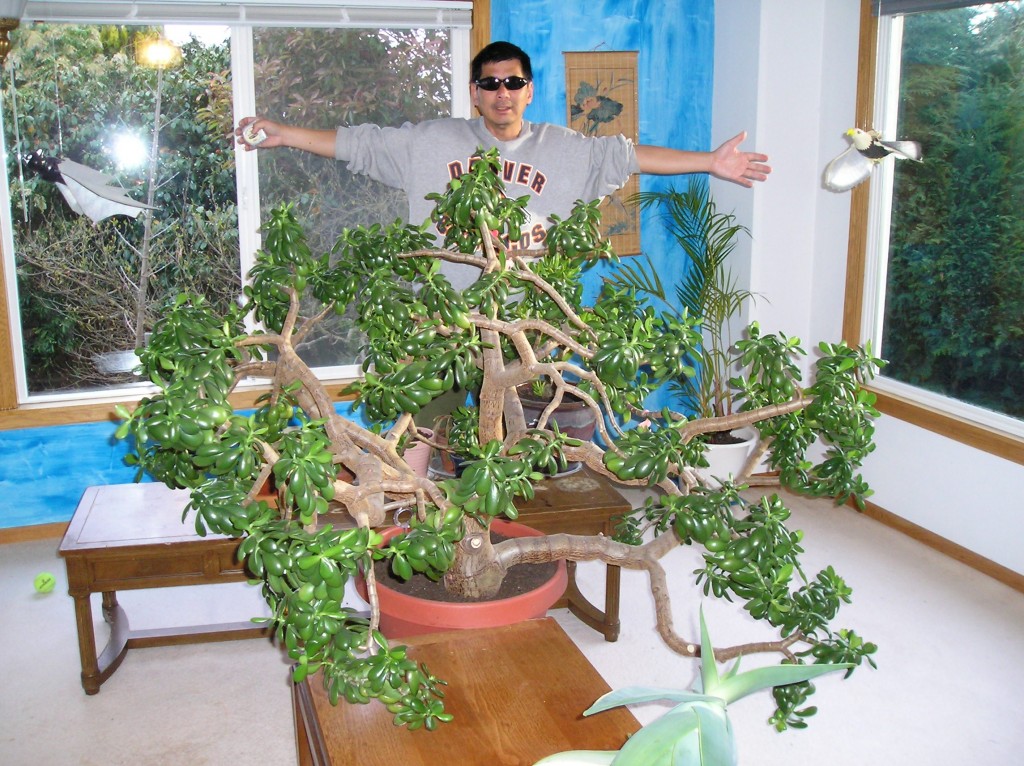
Well, I love gardening too and of course, I created websites relating to what I love. Since I have the largest jade plant in the world and I love growing jade, I have created these websites:
www.GrowingJade.com, www.GrowingJadePlant.com, – to show off the pictures of my jade plants and my garden, the fruits and all the good stuffs I grow. I also create a site www.NurseryListing.com to give all you gardeners a way to find out where all the good nurseries are in any part of USA.
10 years from now, the baby boomers will be aging and we all know that anything relating to Senior sites will be huge. Yes, I do have sites relating to age, www.SeniorsAbuse.com, www.SeniorsRight.com and since we all going to die one day so I have these websites to prepare our funeral: www.AllAboutFuneral.com, www.FuneralSavingPlans.com
We all know how bad the energy crises will get and it will get worst sooner than later, and I have develop this site about energy related issues: www.DevelopNewEnergy.com , www.SolarAnalysts.com and pollution issues like www.PollutedStreams.com
As mentioned above, I am in the technology field and being following closely on the high tech area and was very fortunate to have this domain www.CloudComputing30.com.
If you do not know what cloudcomputing is, please visit the site.
Last but not least, porn is a big business and I am not embarrass to mention that I do own porn sites, they are one of the largest sites in the world: bodohland.com and malaysiayoutube.com and www.OkieClubs.com
Just bear in mind, in the internet business, everything and anything is a fair game and if you don’t do it, someone will do it.
Yes, I have lots of offers for my premium domains but turned them down because the price is not right. Some financial institutions wanted to have my www.Sound401K.com but I have to turn them down.
Sometimes I do not know whether to hate my supervisor for firing me or love him to death. The business I am in will be with me for the rest of my life and NOBODY CAN FIRE ME EXCEPT MYSELF AND best of all, I can work anywhere in the world.
I was on the beaches in Bali/Thailand a couple months ago while “working” for 3 months!!!
Anyway, if you want to just drop me a line, email me at chrisgoh@WineInWashington.com or if you just want to Bull S*hit with me …email me at bs@BullShitWebsites.com at www.BullShitWebsites.com -#1 website in the world.
Put godaddy and hosting for referral get money
Am just finished watching the Australian Open and now the Super Bowl.
Yup it is a special day here in the USA- a special day where 99% of the other part of the world don’t have a clue what American Football is all about- where men trained so many hours in the gym, built their bodies into machines and their goal is to beat each other up just for that special spiny ball, and best of all, they get paid big $$$$ macho bucks.
It is an excuse for us to get together and party and eat and eat and act silly pretending that we care and pretending we know about the game that most of us don’t have the built for it.
Who cares, as long as we are having fun compare to other parts of the world that even flying a kite is dangerous.
Let play ball….!!
Man, what a country~~
I love this country !! God bless USA
Goooooooooooooo Hawks!!
It is so nice to see your city Seattle in the Superbowl, so much free publicity, which means $$$$$$ to the economy. Tourism has gone up, #1 high tech job, and etc etc.
Proud to wear the Seahawks jersey at the airport and getting hugs/kisses and sex and others!!
Can we agree the coach lost the Super Bowl with the “pass” call instead of feeding the beast?….
Even the Pros make mistakes!!
Well, at least this will be the football talk when every Superbowl comes around, and guess what,
the good news is Seattle Sea -hawks will be mentioned all and everytime .
Remember folks, it is all about Entertainment.
Go HAWKS!!
yea, you are on facebook, myspace, linkedin or whatever social platforms you are in and you bitch about invasion of privacy?
Facebook or faceshit, –do you know how many employees have been terminated because of posting their cute pictures when they called in sick!! why don’t facebook put a section on the homepage called…I was terminated because of facebook.
Oh yes, drone will be supplying internet signals in the middle of the jungle and amazon will just drop ship their items and best of all 3d printers will do the rest.

This guy was protesting in front of the white house and he was bitchi that the govt took away his business and blah blah blah-secret services just ignore him//// it is called freedom of speech.
““I no longer have patience for certain things, not because I’ve become arrogant, but simply because I reached a point in my life where I do not want to waste more time with what displeases me or hurts me. I have no patience for cynicism, excessive criticism and demands of any nature. I lost the will to please those who do not like me, to love those who do not love me and to smile at those who do not want to smile at me. I no longer spend a single minute on those who lie or want to manipulate. I decided not to coexist anymore with pretense, hypocrisy, dishonesty and cheap praise. I do not tolerate selective erudition nor academic arrogance. I do not adjust either to popular gossiping. I hate conflict and comparisons. I believe in a world of opposites and that’s why I avoid people with rigid and inflexible personalities. In friendship I dislike the lack of loyalty and betrayal. I do not get along with those who do not know how to give a compliment or a word of encouragement. Exaggerations bore me and I have difficulty accepting those who do not like animals. And on top of everything I have no patience for anyone who does not deserve my patience.”
All I care is me I and myself #1-sick and tired of waiting for others
“I travel with an open mind and pack with a load of good sense of humor”
Why do successful,intelligent creative gifted artists, singers, comedians, etc etc are into alcohol /drug ? and in some forms of abused depression?
I might not know the answer as I am not one of them!!
Travel with an open mind
A good sense of humor
“Adults were pack rats of old, useless emotions.”
As I said many many many times, USA is the best country to live. The quality of life is the best in the world.
Don’t believe me, just spend sometimes outside of USA and then you will appreciate what we have here in good old USA.
If you don’t like the taxes here, then go work outside of US and you will find out how high the taxes are in other countries and the taxes they collect goes to the F corrupted officials.
God bless AMerica!!
In order to make a good living in US, I always tell the immigrants, learn a skill and learn how to BS like the white folks. They always take the credit for the work done by the immigrants
Steve Blammer offered to buy the LA Clippers for 1.8billion USD to Donald Sterling which he bought for just 12Million.
How much money does this 80yrs old guy need ? How ever much viagra he can buy will never never make his dick as strong as mine!!
I am like a dog hound, if I cannot see, cannot feel, squeeze, touch, smell and taste then it is a scam
Google is coming out with googlediapers, it will tell you when to change the diapers. make sense when the population is aging. Save time from going to the dirty public toilets, no pollution at land fields and pretty soon, you are required to wear one in the bus/plane. More seats in the plane now.
People are fat in America.
Why…it is the damn drive thrus
So many damn brand of toilet paper, so which one can do the job of wipping my A@SS
I am so confuse
If it does not kill me, it will make me stronger
I travel far and wide to seek knowledge
I travel far and wide to help the helpless
I travel far and wide to conquer the world
Wisdom from my great great great grand father a great fearless warrior of the Genghiz Khan
When the problem can be resolved with money, then it is not a problem, it is inconvenience.
It is just a pesky constipation in life that needs to be flushed out.
That one good thing about him/her, he always share ALL -that why s/he likes to go barkNaked!
who says money is the root of all evils? It is having no Money is the root of all evils and
who the F says Money cannot buy love or good health?
WTF are they talking about?
Look at the gals those rich bastards have and look at their health.
I can go play all day long with money!!
Public announcement:
Do not text while driving
Driving is a privilege not a right
Take it as LIKE..having sex.
Driving is like having sex, so do you text while having sex?
It is mutually EXCLUSIVE!!
IF YOU have sex, just ONLY and focus pm sexing and not on texting.
Seems like everybody is always trying to sell you something on the internet.
“the reasons why my domains are not selling , is because they cannot afford

